Hero

Greece’s Energy Storage Era: A market awakens

Florian Heise
LinkedIn icon
•
September 3, 2025
•
3 min
Energy Storage

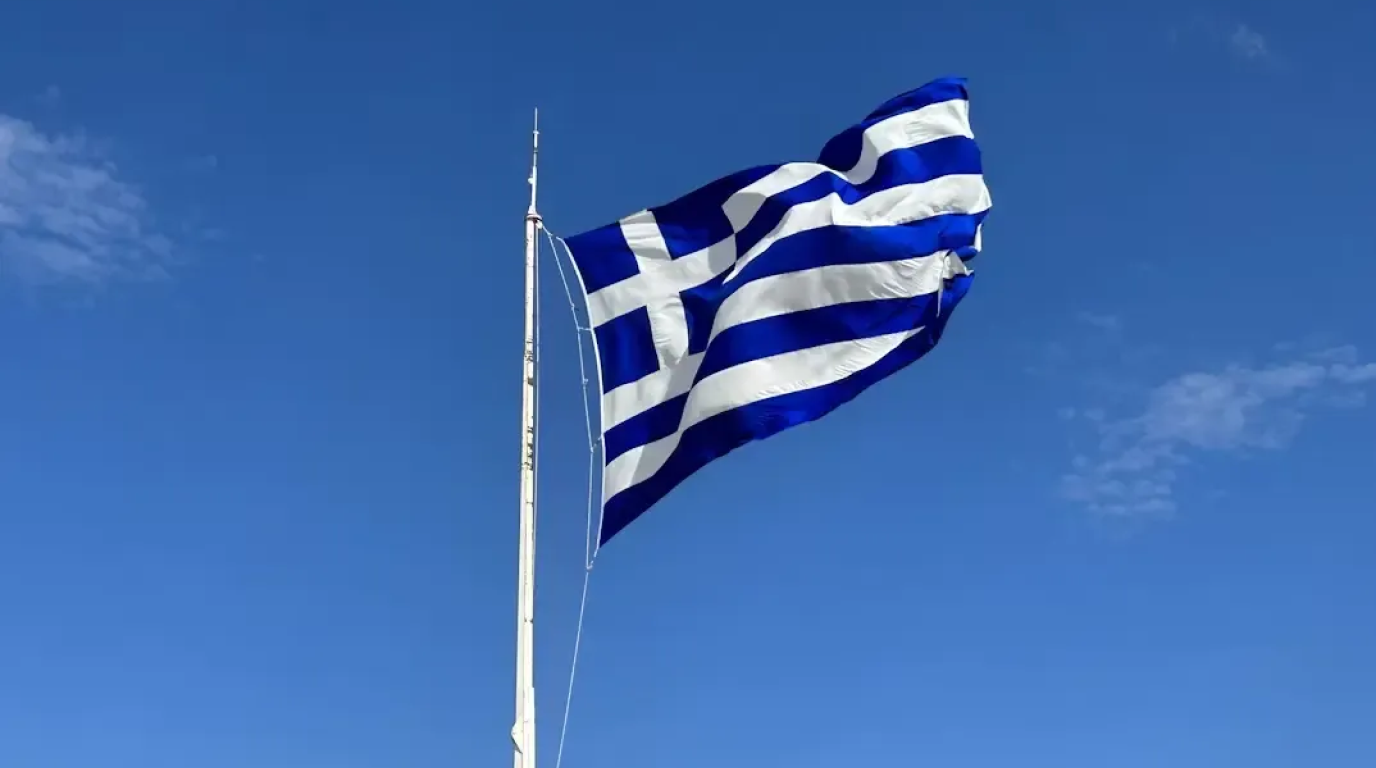
Greece is entering a new phase in its clean energy transition. After years of leading southern Europe in solar power expansion, the country is now shifting its focus to energy storage, a critical move to ensure flexibility, grid stability, and continued momentum in renewables deployment.

From Solar Growth to Storage Readiness

With solar installations growing rapidly, pushing national capacity toward its 2030 target years ahead of schedule, Greece has reached a turning point. The next frontier isn't just more solar, but rather the infrastructure to integrate it effectively. Energy storage systems, particularly battery installations, are quickly emerging as the logical next step.

The country is now planning to scale up its grid-connected battery capacity significantly over the next five years. This includes both utility-scale and co-located storage projects, supported by a blend of public funding, auction mechanisms, and new merchant business models.

A Two-Track Storage Strategy

Greece’s approach to storage development is shaping up along two parallel paths: regulated tenders and subsidy-free merchant deployments.

In recent years, the government has run competitive tenders that provided upfront capital support and fixed revenues through long-term contracts. These auctions attracted major local and international players. However, a shift is now underway: public support is winding down, and the focus is turning to merchant-based models, where batteries earn their revenues by selling flexibility services to the market.

This evolution reflects a broader European trend. Investors with a strong understanding of energy trading, flexibility markets, and ancillary services are well-positioned to thrive in this new environment, especially in grid-constrained regions where storage is urgently needed.

The Role of Pumped Hydro and Transmission Bottlenecks

While batteries are gaining traction, Greece is also investing in large-scale pumped hydro energy storage. By repurposing decommissioned mining sites, the country is turning industrial scars into energy assets. These projects promise multi-hour discharge capability and long-term operational lifespans, making them key components in the national decarbonization plan.

That said, the biggest challenge remains the grid. Grid access is a critical barrier, and many projects despite winning capacity in past auction are struggling to proceed due to slow connection approvals and infrastructure limitations. As a result, project developers are prioritizing areas where substations already exist or are under development.

Behind-the-Meter: Still Waiting to Bloom

In contrast to utility-scale projects, the market for commercial and residential behind-the-meter (BTM) batteries in Greece remains largely dormant. Policy uncertainty, limited revenue streams, and infrastructure limitations have kept this segment on the sidelines. Only now are early attempts to retrofit storage to existing solar sites gaining momentum, mostly through cooperative clusters of smaller installations sharing a single grid connection.

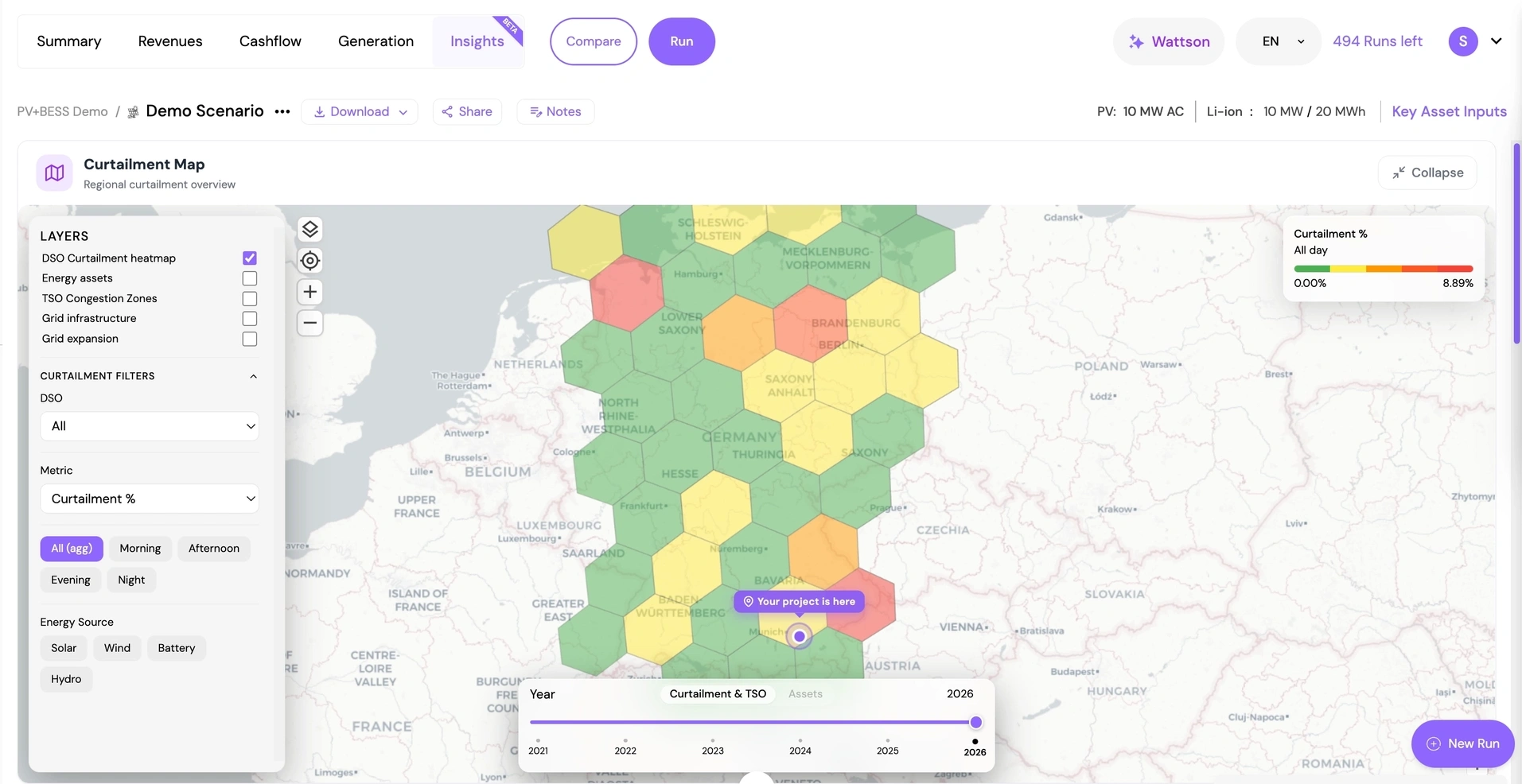
However, the tipping point for behind-the-meter storage may not arrive until grid curtailment and negative pricing become common occurrences, conditions that are still a few years away.

What Lies Ahead

Greece’s energy storage journey is just beginning, but its trajectory is clear. As the grid becomes increasingly saturated with renewable electricity, batteries will provide the flexibility needed to stabilize supply, unlock more generation, and enable the continued growth of clean energy.

The government’s decision to prioritize storage in grid-constrained areas, coupled with investor appetite for market-based revenue models, signals a maturing landscape. Storage is no longer a bonus, it's becoming essential infrastructure.

Developers and investors who move now will be best positioned to capture value from flexibility markets, energy trading, and future grid services. In the long term, Greece’s bet on energy storage may prove just as transformative as its early embrace of solar power.
‍

About The Author

Florian Heise
Florian Heise
LinkedIn icon

Florian Heise is an energy-industry specialist with experience in consulting, logistics tech, and green-hydrogen development. As former head of strategic projects, he researched BESS and energy-storage markets across Germany and the EU. Today, he uses that knowledge as co-founder of Re-Twin Energy. Florian holds a Master’s in Finance & Accounting from Freie Universität Berlin and has even run a small coffee-import venture.

Ready To Make Smarter Energy Storage Investment Decisions?

Talk to our team. We'll walk you through a live analysis of a real asset in under 30 minutes.

Answers to your questions

What is Re-Twin Energy?

Re-Twin Energy is a Frankfurt-based software company that builds digital twins of battery energy storage systems (BESS). Its SaaS platform calculates site-specific business cases, long-term revenue forecasts and independent performance benchmarks, so developers, asset owners and investors can make investment decisions they can defend to banks and investment committees.

Who founded Re-Twin Energy?

Re-Twin Energy GmbH was founded by Florian Heise and Mayur Andulkar, who are also its managing directors. The company is based in Frankfurt, Germany.

What is Re-Twin Energy's platform?

The Re-Twin platform has four modules that all work on the same digital twin of a BESS: Investment Analysis (business cases from historical backtests and forecasts up to 2060), Live Benchmarking (live trading simulation for operating assets), ArTee (an AI energy analyst) and Atlas (a site and grid map). Together they cover the full asset lifecycle, from site selection and investment decision to operation.

What is ArTee?

ArTee is the AI energy analyst inside the Re-Twin platform. Users ask ArTee questions about their battery storage project, for example on configuration, market strategy or results, and ArTee answers based on that project's digital twin. ArTee is included from the Pro plan, with extended usage in the Expert plan.

What is a digital twin of a battery storage system?

A digital twin is a 1:1 virtual model of a battery storage asset, either planned or already operating. Re-Twin's digital twin reflects the asset's technical constraints (power, capacity, degradation, availability), market rules, grid connection restrictions and dispatch logic. When the real project changes, the twin is updated, so revenue results always match the current setup.

Who uses Re-Twin?

Re-Twin is used by BESS project developers, asset owners, utilities and municipal utilities (Stadtwerke), investors and banks, energy consultants and industrial energy users. Customers and partners include The Mobility House, badenova, Quadra Energy, among many others.

Which battery storage setups can Re-Twin model?

Re-Twin models standalone BESS as well as co-located setups: PV + BESS, Wind + BESS, hybrid PV + Wind + BESS on a shared grid connection, and BESS combined with on-site consumption. Standalone modelling is included in the free trial, co-location modelling from the Pro plan.

Which energy markets does Re-Twin simulate?

Re-Twin simulates BESS revenues and optimizes the revenue stack across spot markets (day-ahead, intraday) and ancillary markets (FCR, aFRR and mFRR), taking cycling limits, prequalification and degradation into account.

What does the Investment Analysis module do?

Investment Analysis calculates the business case of a BESS project in minutes. It combines full historical backtesting with long-term revenue forecasts up to 2060 in six scenarios from conservative to optimistic, and includes degradation, grid constraints and project costs. Results include revenues per market, cash flows and IRR / NPV, and can be exported as a report.

What is Live Benchmarking?

Live Benchmarking simulates how an operating BESS would perform in the markets using live market data and the asset's own technical setup. Asset owners use the result as an independent, asset-specific benchmark for their trader or optimizer, to compare strategies and to check the original business case. Unlike generic market indices, the benchmark reflects the individual asset. Re-Twin offers this together with The Mobility House as an independent trading benchmark.

What is the Re-Twin Index?

The Re-Twin Index indicates the revenue potential of a representative BESS asset across different markets. It simulates a baseline trading strategy without asset-specific or operational constraints, giving a clear reference for what systems of different durations can earn and enabling comparison across markets and geographies. The optimization uses an imperfect-foresight approach, reflecting realistic trading conditions rather than hindsight-optimal results. The full methodology is documented here: https://docs.re-twin.energy/concepts-background/power-market-101

What data does Re-Twin use?

Re-Twin uses historical prices from spot and ancillary service markets, long-term fundamental price forecasts from its partners FfE (Forschungsstelle für Energiewirtschaft) and MAON, weather data to generate PV and wind profiles for a given location, and the user's own project parameters. The full methodology is published at docs.re-twin.energy/methodology

In which format is the data downloadable?

Results can be exported as PDF, Excel and CSV. Downloads are in 1 hour granularity, PRO users get the additional option to download in 15 min granularity.

For which countries is the platform available?

As of October 2026, Re-Twin covers Germany, Austria, the Netherlands, Belgium and Spain. The free trial and the Pro plan include one country per access, the Expert and Enterprise plans include multiple countries. Re-Twin is expanding to further European markets and looks for pilot partners in new countries.

How do I get started?

Sign up with a free account to explore the platform and test its capabilities with 2 free runs in Investment Analysis and a free trial in Live Benchmarking. Reach out via our website or info@re-twin.energy for any questions, custom demos and subscription possibilities.

Is training available?

Yes. Re-Twin offers onboarding and ongoing user support. In addition, the documentation (docs.re-twin.energy), white papers, blog articles and webinar recordings explain the methodology and typical use cases, and ArTee answers questions directly in the platform.

What is a Re-Twin custom project?

A custom project is a time-bound engagement for organisations with hands-on requirements. Re-Twin and the client agree on scope and data, Re-Twin runs the modelling, and results are delivered through the platform with full feature access.

Can I bring my own forecast scenarios?

Yes. Besides six standard forecast scenarios from conservative to optimistic, users can upload their own price forecasts to reflect specific market assumptions. Uploading own forecast data is part of the Expert plan.

How secure is the platform?

The Re-Twin platform is hosted on Microsoft Azure in the EU. Re-Twin is ISO 27001 certified, processes data in line with the GDPR and encrypts data in transit and at rest. Details are available in the Re-Twin Trust Center (re-twin-energy.trust.site).

Is Re-Twin independent?

Yes. Re-Twin does not trade or optimize batteries itself, so its benchmarks and forecasts are not tied to a trading business. This makes them usable as a third-party baseline for banks, investors and asset owners.

How is Re-Twin different from other BESS revenue forecasts?

Re-Twin calculates revenues for the specific asset instead of using market averages or generic indices. Every assumption, from cycling limits to grid restrictions, is documented and traceable, so results can be explained in investment committees and bank due diligence. Re-Twin is independent of traders and optimizers, and its methodology is backed by published research with FfE and the transmission system operator Amprion. Business cases take minutes instead of weeks of consulting work.